


Catching Up with Eric Zuber: A Two-Piano Tribute to Rachmaninoff
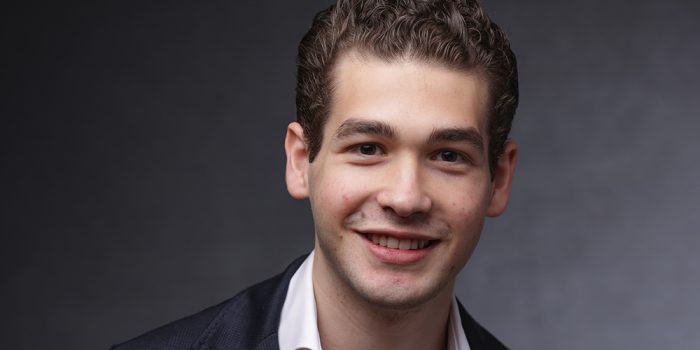
For pianist Eric Zuber, music has always been more than craft—it’s connection. This fall, he returns to the concert stage not only as a performer, but as a collaborator, recording and performing Rachmaninoff’s music for two pianos with a partner who helped shape his artistry from the start: his longtime teacher and mentor, Boris Slutsky.
The duo recently recorded their September 28 performance repertoire, a sweeping journey through Rachmaninoff’s First Suite, Second Suite, and the epic Symphonic Dances. It’s a personal project, professionally polished yet deeply rooted in decades of shared musical intuition.
“Recording two-piano works is uniquely challenging,” Zuber explains. “Unlike instruments with gradual attacks, the piano’s sound is immediate—and microphones don’t miss a thing. What might pass unnoticed in a resonant concert hall becomes crystal clear in a studio.”
But when the chemistry is right, the process becomes something magical.
A Rare Musical Bond
“Boris has been my teacher since I was 11. So much of how I think musically comes from him,” Zuber shares. “We hardly needed to talk through things in rehearsal. Timing, phrasing, who takes the lead—it all just… worked.”
That synergy is vital when interpreting Rachmaninoff’s dense and often flexible textures. “His writing is full of rubato and shifts in musical weight,” says Zuber. “You have to listen constantly and adjust to each other in real time.”
While labeled Primo and Secondo, the parts are not about rank. “Think of them more as orchestral reductions. It’s not who’s ‘first’ or ‘second’—it’s who carries which section of the orchestra,” he explains. “These roles shift constantly, so both pianists must be ready to lead or support, often within a single phrase.”
A Composer’s Evolution in Three Works
What makes this program special is that it spans Rachmaninoff’s entire compositional career.
“The First Suite, Op. 5, is early Rachmaninoff—balletic, full of Tchaikovsky’s influence,” says Zuber. “Then you have the Second Suite, rich and thick in texture, almost orchestral in sound. And finally, Symphonic Dances, Op. 45, which is rhythmically and harmonically adventurous. That’s his mature voice, with hints of Stravinsky and modernism.”
Together, the three works create a kind of musical biography—charting the emotional and stylistic evolution of a composer whose heart never left the piano bench.
Why Rachmaninoff? Why Now?
“I’ve always been drawn to Rachmaninoff’s sincerity,” Zuber says. “There’s emotional honesty in his music that’s hard to put into words. You feel it deeply—whether it’s joy, loss, nostalgia, or love.”
That universal emotional pull may explain Rachmaninoff’s enduring popularity. “He captures what it is to be human. That’s what makes his music timeless.”
For Zuber, this project is also a way of honoring Slutsky, who influenced him as both pianist and person. “It meant a great deal to me to record these works with Boris. I wanted to preserve a piece of his extraordinary musicianship, which I was lucky enough to experience regularly. And more than that—I wanted to enjoy making music together, as we always have.”
A Performance Not to Miss
As Zuber and Slutsky prepare for their September 28 performance, audiences can expect more than technical brilliance. They can expect a heartfelt tribute to a lifelong musical bond and the timeless genius of one of classical music’s most beloved composers.
“It’s not just about notes,” Zuber says. “It’s about a relationship—between us, between the music and the listener, and between Rachmaninoff and the piano itself.”
Eric and Boris’ album releases September 26.
Upcoming Events
-

Jazz
Premiere Series: Connor Rohrer
November 14Learn More -
Jazz
Premiere Series: Brandon Goldberg
December 5Learn More -

Jazz
Premiere Series: Joe Block
January 23, 2027Learn More